
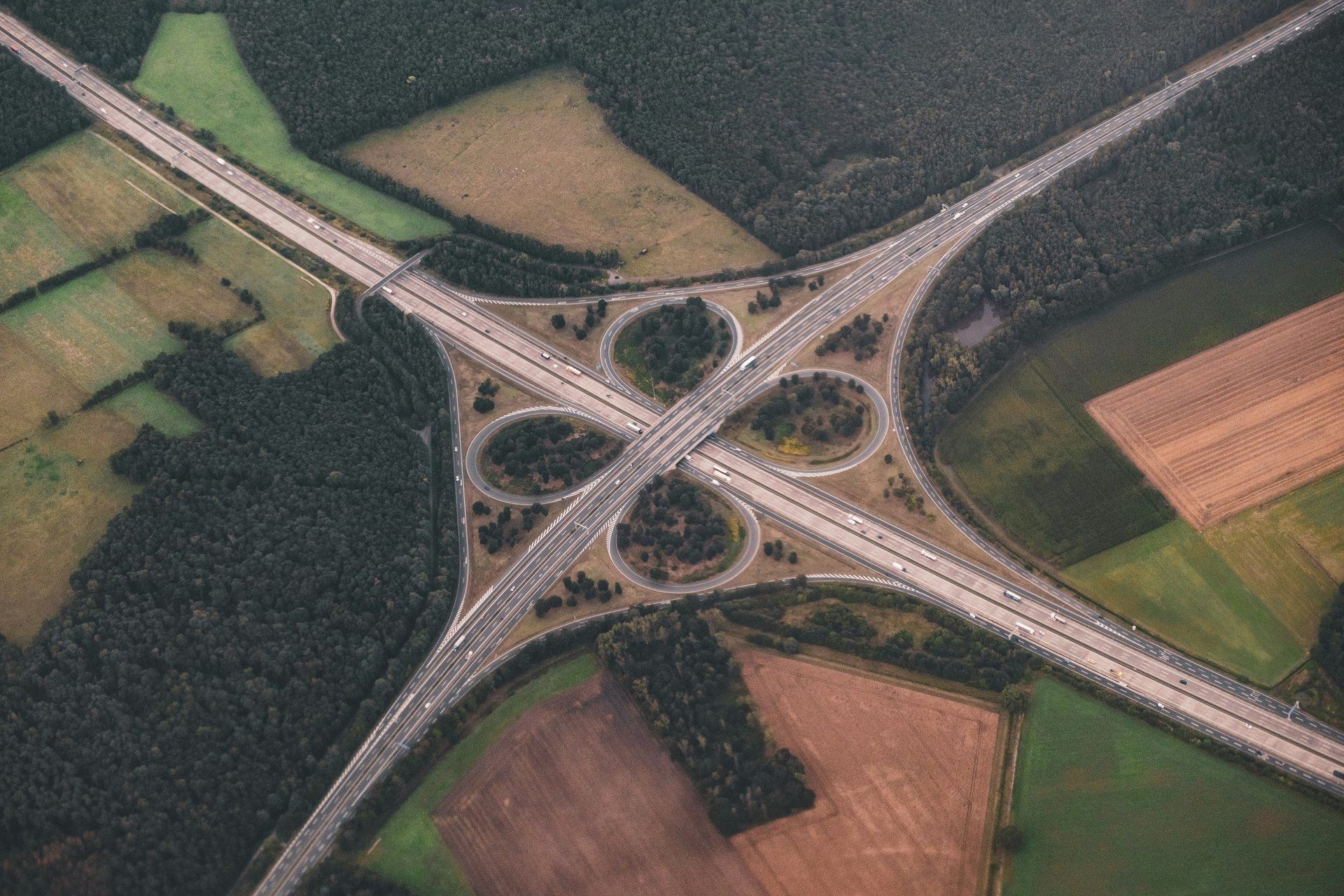

The crews rebuilding the interchange and its four flyover ramps have passed one million work hours without a lost-time injury. It is an internal milestone, not a trophy. It was earned one shift at a time, next to live traffic, on tall columns and under girders swinging into place at night, by PerryWester crews and trade partners who treated every closure like the first.
What made the difference
Highway work over live lanes has its own hazards. Traffic a few feet from the work zone. Night shifts under lights. Heavy picks over roads that must reopen by morning. The practices behind this milestone are not new, but the interchange team applied them every shift without exception.
- Pre-task planning every shift. Each crew walked its work area and reviewed the hazards before starting, and updated the plan when traffic, weather or conditions changed.
- Positive protection. Concrete barrier, not cones, separated crews from traffic wherever the work allowed, and every work zone layout was checked at setup.
- Lift plans for every girder. Each overnight girder set had an engineered lift plan, a pre-lift meeting and a clear drop zone kept free of people.
- Stop-work authority. Anyone on the job, from a first-week laborer to a trade partner foreman, could stop the work. When they did, the response was a thank you.
- One standard for everyone. Trade partners worked under the same orientation, the same expectations and the same daily huddles as our own crews.
Nobody on this job worked safely for a milestone. They did it so everyone could go home at the end of the shift. The milestone is just what that looks like added up.
Safety manager, PerryWester
The work continues
A milestone like this can make a team comfortable, and comfort is a hazard of its own. The interchange crews marked the day with a crew breakfast at the end of a night shift, then went straight back to planning the next closure. The hours keep counting, and the expectations do not change.